By Doyin Ojosipe
Youths who featured as panellists at a radio town hall meeting on whistleblowing and whistlerblower protection organised by the African Centre for Media and Information Literacy (AFRICMIL) in collaboration with the Progressive Impact Organisation for Community Development (PRIMORG) have called on the Federal Government of Nigeria to lift the ban on the social media app, Twitter.
Recall that federal government last week banned the operations of Twitter following a disagreement with the social media giant over the pulling down of President Muhammadu Buhari’s ‘threat’ tweet to a section of the country.
Twitter and Facebook said they had deleted the tweets because they violated their community policy.
Speaking at the townhall meeting which aired on KISS FM 99.9 in Abuja, Wednesday, the youths unanimously noted that government was doing more to push citizens away rather than bring them closer to hear their voices.
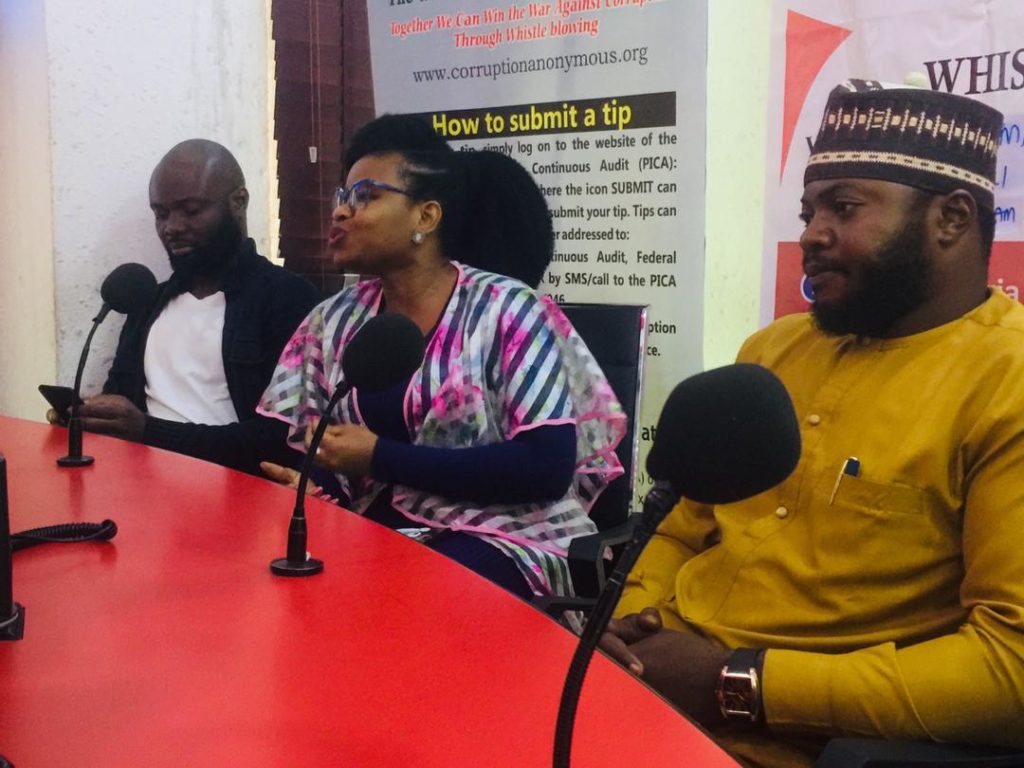
A youth leader who doubles as Community Engagement Officer at the Connected Development (CODE), Mukhtar Modibbo, responding to the theme of the talk-show, ‘How to Mobilize Youths to demand accountability through whistleblowing,’ said it was unfortunate that government which made a policy such as whistleblowing had decided to ban twitter where people not only blow the whistle but also rely on as a source of livelihood.
Modibbo stated that it was increasingly difficult to encourage youths to expose corruption because government and other security actors had failed to protect whistle-blowers or even genuinely pay them their reward.
He asked, “Can the citizen trust government with this kind of policy? We are here still talking about the twitter ban, we are talking about the circular by the federal government directing media houses to deactivate their twitter handles.”
In her contribution, Cynthia Mbamalu, Director of Programs at YIAGA Africa, expressed dissatisfaction over the ban, noting that the social media was used extensively to expose corruption and other vices, but then, government has gone ahead to ban such an important tool of participation in governance which is also being used in demanding accountability and transparency.
According to her, “Government must realize that citizen participation in governance is sacrosanct to democracy We need more policies for human rights and freedom rather than restrictions and placing of limits.”
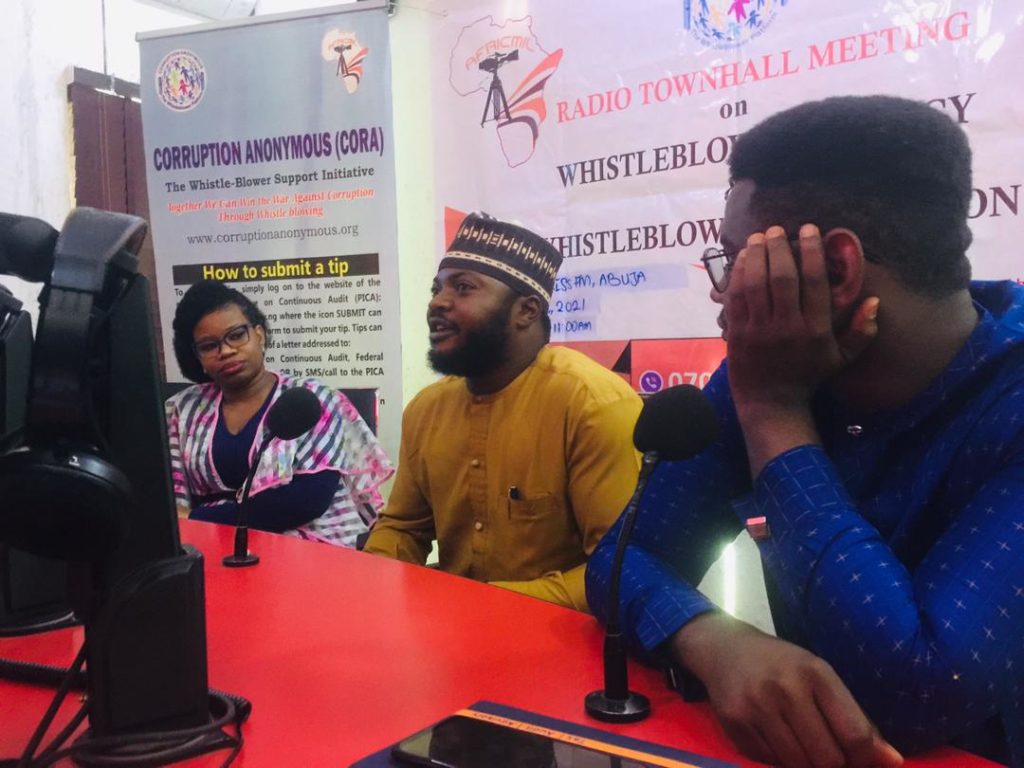
She noted that there is an enabler of culture of silence on the part of the government.
“Consistently, citizens do not see a sincerity of purpose with the whistleblowing policy… young people do not want to engage in activities that will just end in futility especially when they have cause to believe there is nothing genuine about the move,” she said.
She urged government to lift the twitter ban, which she likened to muzzling the voices of citizens, if implementation of certain policies must be successful.
Another panellist, who is Special Adviser to the Executive Secretary of National Disability Commission, Musa Musa, said corruption was so deep-rooted in the country that it will take many years to be significantly reduced.
He noted that some People Living with Disabilities (PLWDs) found themselves in such situations due to corrupt practices of some people who were responsible for the provision of hospitals, drugs, good roads among other, but failed to do so because of private gains.
On the issue of twitter ban, Musa said government should have analysed the situation before taking such a decision, noting that decision shouldn’t be taken on the basis of personal and immediate benefits but rather the positive they make on society in impact in the long run.
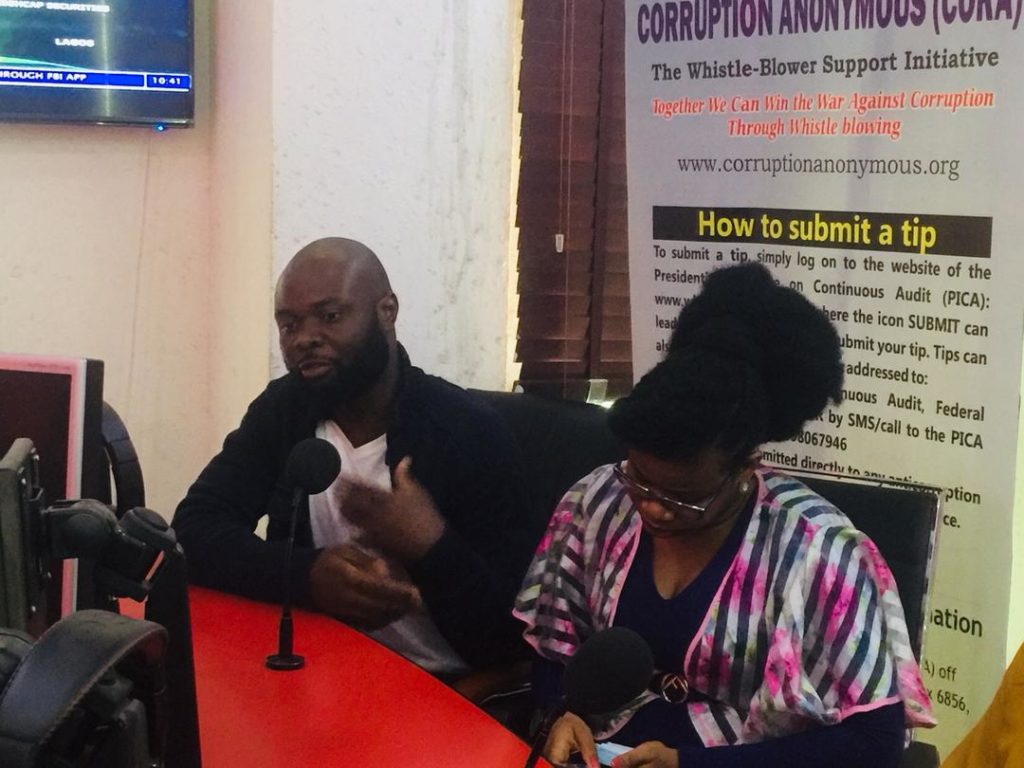
“I am advising government to unban twitter, because apart from the economic benefits it brings, there is a social right around it,” he said.
Musa further urged the government to include PLWD as stakeholders in the fight against corruption as a way of mobilizing them to blow the whistle.
Project Lead at TapN’itiative, Martin Obono, on his own part said while it is helpful to consider corruption in other aspects and not just focus on funds embezzlement, there was need to encourage the use of technology in exposing corruption.
He said the use of technology could give a level of anonymity and protection to whistle-blowers. Obono however noted that without the political will on the side of the government to fight corruption and the unavailability of an enabling law to protect whistle-blowers, people may not blow the whistle.
Speaking on the Twitter ban, he said it was imperative for government to consider the implications, as it was going to be nearly impossible to engage the youths through other means.
According to him, the suspended media was about the top platform where engagement takes place.
“So now that you are regulating that and banning others, it becomes difficult to engage the youths, so government should look into the negative implication of their own action,” he said.
The radio townhall meeting which is part of a series of advocacy activities of the whistle blowing project of the African Centre for Media and Information Literacy (AFRICMIL), is supported by The John D and Catherine T, MacArthur Foundation.